
Project:
PONDS (Post Office Non-deliverable System)
PONDS (Post Office Non-deliverable System)
(Due to the proprietary nature of this product, the exact item and client names have been obscured or changed and images are
not enlarged.)
not enlarged.)
Summary
Digitizing a High-Risk, Revenue-critical Government Process
Transformed a fully manual, revenue-critical postal system into a scalable digital application — eliminating a 5-month backlog and enabling
COVID-era telework.
COVID-era telework.
As the sole UX Designer across five Agile teams, I led service design, human-centered research, product design and content strategy for the digitization of the Post Office Non-Deliverables System (PONDS). Despite limited client access, organizational resistance to Human Centered Design (HCD), and shifting technical dependencies, the product launched successfully and became mission-critical infrastructure.
Impact Highlights
• Eliminated a 5-month operational backlog
• Reduced inefficient manual task flows
• Enabled remote work during the COVID pandemic
• Increased stakeholder trust and cross-team alignment
• Influenced long-term User Experience (UX) adoption within the contract
Project Overview
Client: Government Agency – Lee’s Summit, MO
System: Post Office Non-Deliverables System (PONDS)
Engagement Model: SAFe Agile
Scope: Service design, UX strategy, interface design, full-stack development
The client requested conversion of a fully manual workflow into a digital application. The system was revenue-sensitive — outages or delays could result in multi-million-dollar daily losses.
My Role and Responsibilities
As the only UX Designer on the effort, I led:
• UX Research and Strategy
• Information Architecture
• Product Design and Management
• Service Design
• UX Advocacy and Education
• Content Strategy
• HCD Contract Evangelist
• HCD Contract Evangelist
Strategic Challenges and Leadership Response
Organizational Resistance to HCD
First Problem
The contract did not understand Human-Centered Design, its methodology, or business value.
Intervention
• Led brown-bag education sessions on HCD fundamentals
• Embedded UX into Agile ceremonies
• Advocated for UX involvement from concept through
post-launch iteration
post-launch iteration
• Positioned UX as risk mitigation, not “design polish”
Result
HCD gained legitimacy within the program and was integrated into
delivery cycles.
delivery cycles.
Below are a few sample slides of the presentation I used to instruct clients and teams about User Experience (UX) Design / Human-centered (HCD) Design
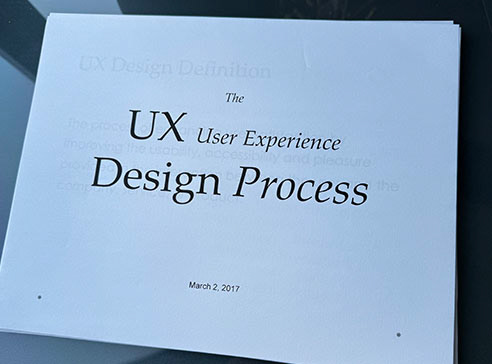
UX Design Slide Sample 1
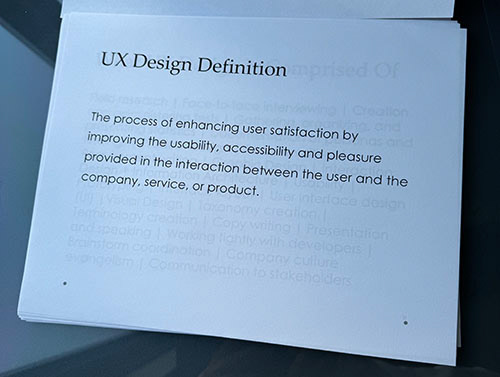
UX Design Slide Sample 2
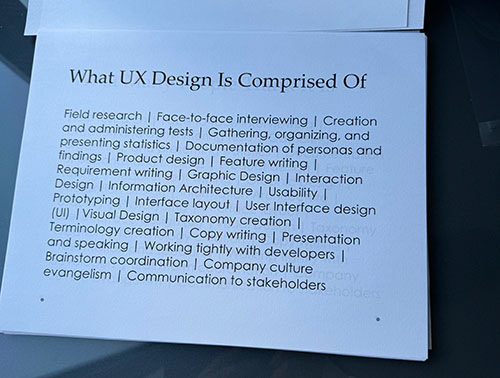
UX Design Slide Sample 3
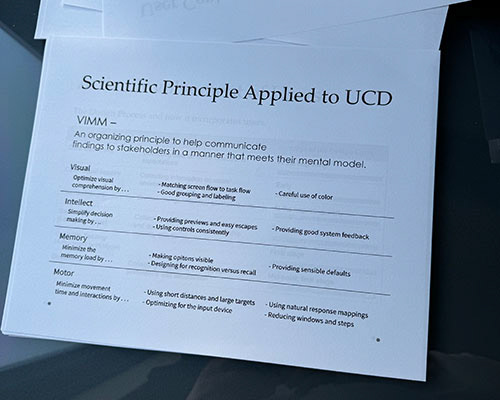
UX Design Slide Sample 4
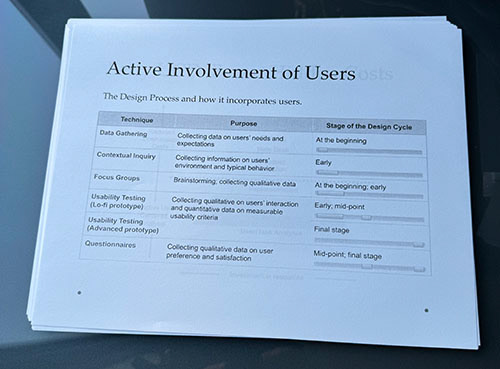
UX Design Slide Sample 5
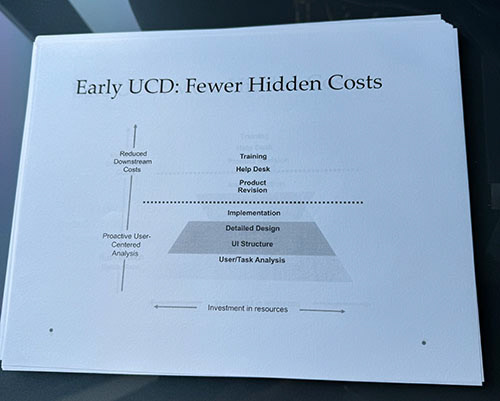
UX Design Slide Sample 6
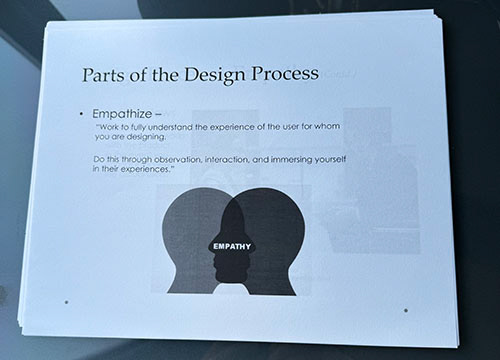
UX Design Slide Sample 7
Limited User Access in a High Risk Environment
Second Problem
• Fee-based agency with revenue pressure
• Limited time allowed for research
• Operational risk if employees stepped away from work
Strategic Adaptation
• Developed evaluative design prototypes upfront
• Used design artifacts as research tools
• Structured on-site immersion to maximize compressed access
On-site Ethnograph Research Studies
(Lee's Summit, MO)
(Lee's Summit, MO)
I traveled on-site with the Government IT PM and two BAs to conduct
immersive strategic research.
immersive strategic research.
Methods Used
• Field studies
• Contextual inquiry
• Observational ethnography (Along with filmed user videos within
security guidelines)
security guidelines)
• Individual interviews
• Question and answer brainstorming sessions with user teams
and stakeholders
and stakeholders
• Participatory design reviews
Strategic Outcome
• Identified inefficiencies invisible in requirements documentation
• Reframed task flows based on real-world behavior
• Built trust through presence and listening
• Established long-term collaborative relationship
The three-day immersion produced more actionable insight than months of
remote meetings.
remote meetings.
Synthesizing Research into Product Strategy
Back in-office:
• Synthesized findings using 2x2 prioritization matrices
• Developed “How Might We” reframing statements
• Re-architected task and user flows
• Redesigned information architecture
• Created relative Ecosystem
• Validated feasibility with BAs and engineering
• Prototyped low-fidelity concepts (Balsamiq) to pressure-test assumptions
Weekly client grooming sessions evolved into collaborative design workshops — maintaining continuous empathy and alignment.
Navigating Late-Stage System Ambiguity
Unknown Future Mail Retrieval System
Near first launch, we were informed PONDS would integrate with a mail retrieval system not yet selected.
Risk: Building rigid integrations that could become obsolete.
Solution:
• Designed modular integration pathways
• Developed A/B/C adaptable variants based on three potential systems
• Reduced rework risk while preserving delivery timeline
We planned for strategic future-proofing under the uncertainty of not knowing with mail platform they would ultimately select.
Measurable Business Impact
Operational
• Eliminated 5-month of non-deliverables backlog
• Reduced unnecessary manual steps
• Streamlined user and task flows
Organizational
• Enabled large-scale telework during COVID
• Reduced dependency on in-office manual processes
• Strengthened trust between agency and development team
Cultural
• Elevated perception of UX within contract
• Demonstrated business value of human-centered and service
design processes
design processes
Client Feedback
****Unfortunately, I moved to another contract before the end of the project.
“When your move was announced, I said ‘no, no, no!’
You did such a great job visiting PONDS and documenting our processes…
You took our info and used it to help create SITS/PONDS and had so many great ideas.
You will be greatly missed.”
You did such a great job visiting PONDS and documenting our processes…
You took our info and used it to help create SITS/PONDS and had so many great ideas.
You will be greatly missed.”
...........................................................................................................
During COVID: Employees' emotional comments
“Because of this functionality, the PONDS team is able to telework…
If we did not have this system, I'm not sure we would be able to telework as we are now.”
If we did not have this system, I'm not sure we would be able to telework as we are now.”
Why This Project Mattered
This was not a redesign.
It was:
• Organizational change management
• Digitizing a Manual System
• Service ecosystem transformation
• Revenue-risk mitigation
• Agile UX integration at scale
• Strategic design under ambiguity
I operated as a Senior UX partner with the client — not in a limited sprint capacity — influencing product direction, stakeholder mindset, and long-term capability.
Research was ongoing with weekly client meetings and updates were redesigned to fit changing task patterns and client needs.
Artifacts - Unfortunately I do not have any artifact samples for this project. Please see my other user stories for samples of my work there.