
Project:
Case Management Redesign
Case Management Redesign
(Due to the proprietary nature of this product, the exact item and client names have been obscured or changed and images are not enlarged.)
Summary
This case study highlights an internal, exploratory initiative to reimagine a large, legacy government Case Management System using Human-Centered Design (HCD) and Service Design principles. Although the redesign was not formally executed, the work successfully demonstrated HCD value, secured executive buy-in, and resulted in expanded contract scope and additional teams.
Project Overview
Client: U.S. Government Agency (fee-based)
System: Enterprise Case Management System
Role: Solo UX Designer across five Agile teams
Scope: Internal, Non-contractual proposal
Timeline: Exploratory → Stakeholder buy-in → Research validation
Outcome: UX maturity growth, contract expansion, stakeholder trust
Problem
The agency’s Case Management System:
• Had grown overly complex through years of patches and add-ons
• Was fragile, difficult to modify, and risky to maintain
• Had never been reassessed against real user workflows or applicant processes
• Created inefficiencies for both internal users and external applicants
• Despite these issues, modernization was not on the client roadmap.
Objective
Demonstrate — without formal requirements — that a Human-Centered, Service Design–led approach could:
• Simplify system structure
• Align the system to real workflows
• Reduce long-term technical and operational risk
• Provide a credible vision for modernization
Role and Responsibilities
As the only UX Designer on the effort, I led:
• UX Research and Strategy
• Information Architecture
• Product and Interface Design
• Service Design
• Content Strategy
• UX Advocacy and Education
Key constraints:
• No initial client access
• No formal requirements
• Limited system documentation
Sample slides of a presentation used to inform clients and teams about User Experience (UX) Design / Human-centered (HCD) Design
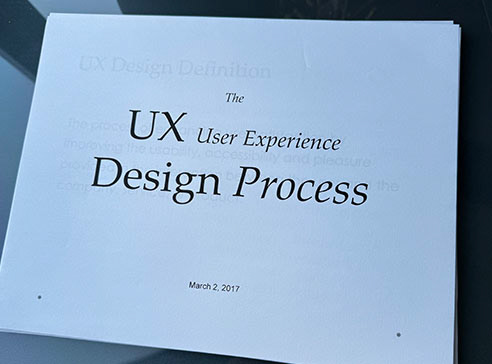
Title Slide
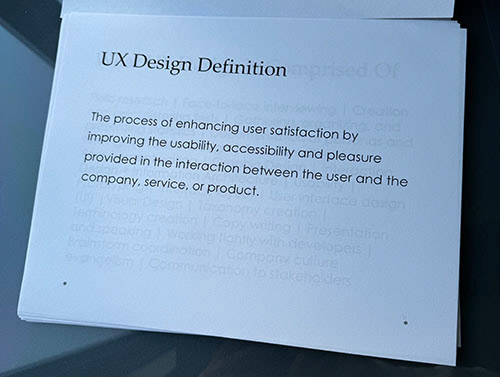
UX Definition Slide
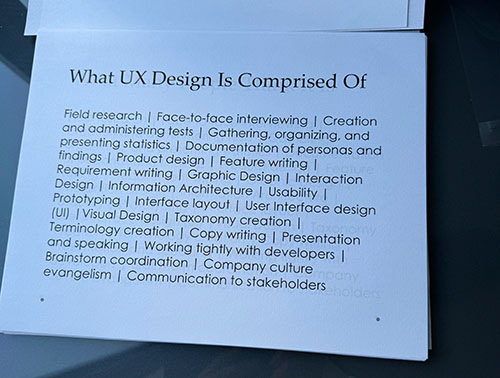
What UX Design is Comprised Of Slide
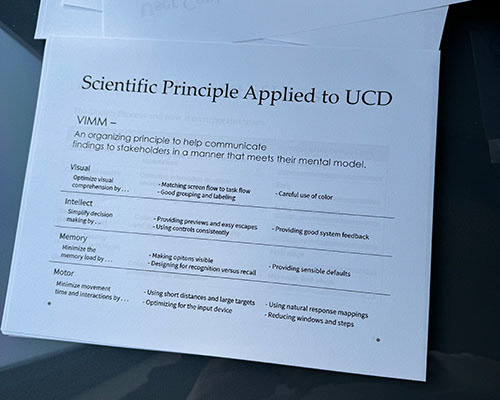
Scientific Principles Slide
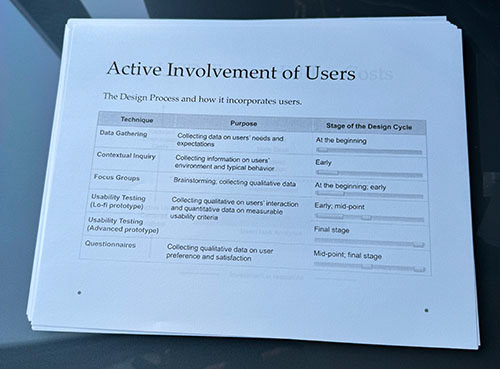
Active Involvement of Users Slide
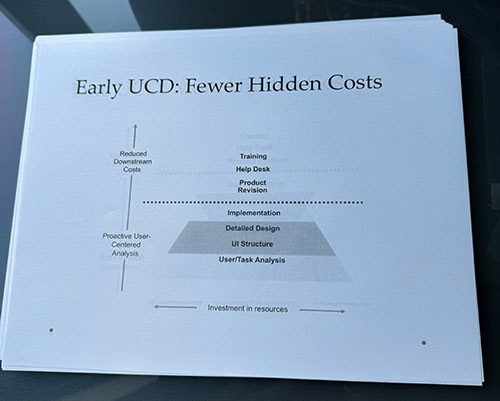
Cost Savings Slide
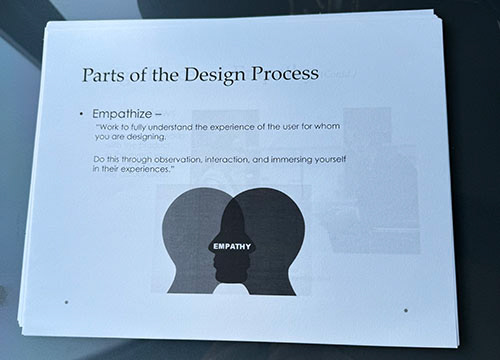
Empathy Slide
Approach
The CTO intentionally removed requirements to enable unconstrained ideation.
I used this freedom to:
I used this freedom to:
• Reconstruct workflows from system artifacts and engineering input
• Design a future-state Information Architecture grounded in scalability and usability
• Use design artifacts as research and alignment tools
Key Challenges and Responses
1. Low UX / HCD Maturity
Response:
• Led brown-bag sessions to educate teams on HCD value and increase corporate
UX maturity
UX maturity
• Integrated UX practices into Agile delivery
• Advocated for UX involvement from concept through post-launch and
user testing
user testing
2. Restricted User Access
Response:
• Created a proposed design upfront
• Used the design as an evaluative research artifact
• Enabled faster, lower-risk stakeholder feedback
3. Missing Client Requirements
Response:
• Built a new Information Architecture from limited data based on my perception
• Balanced technical constraints with anticipated user value
• Validated assumptions through stakeholder review
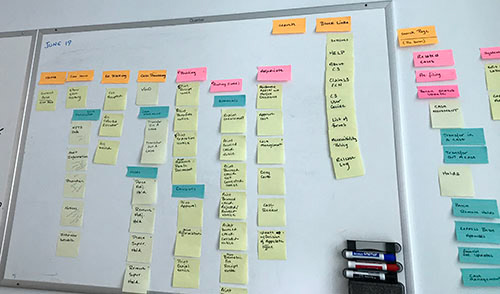
Updated Application Info Architecture
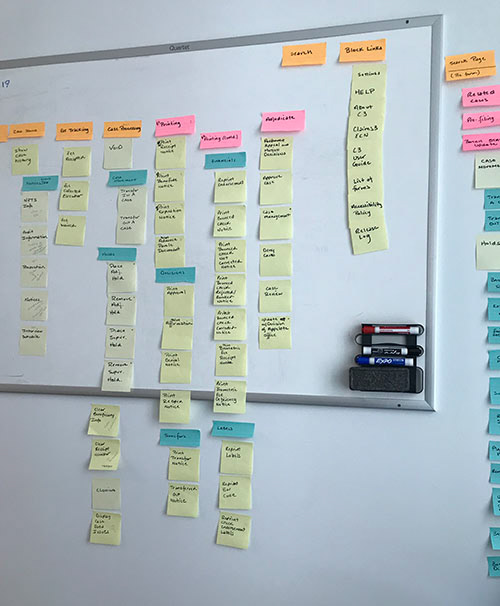
Updated Application Info Architecture
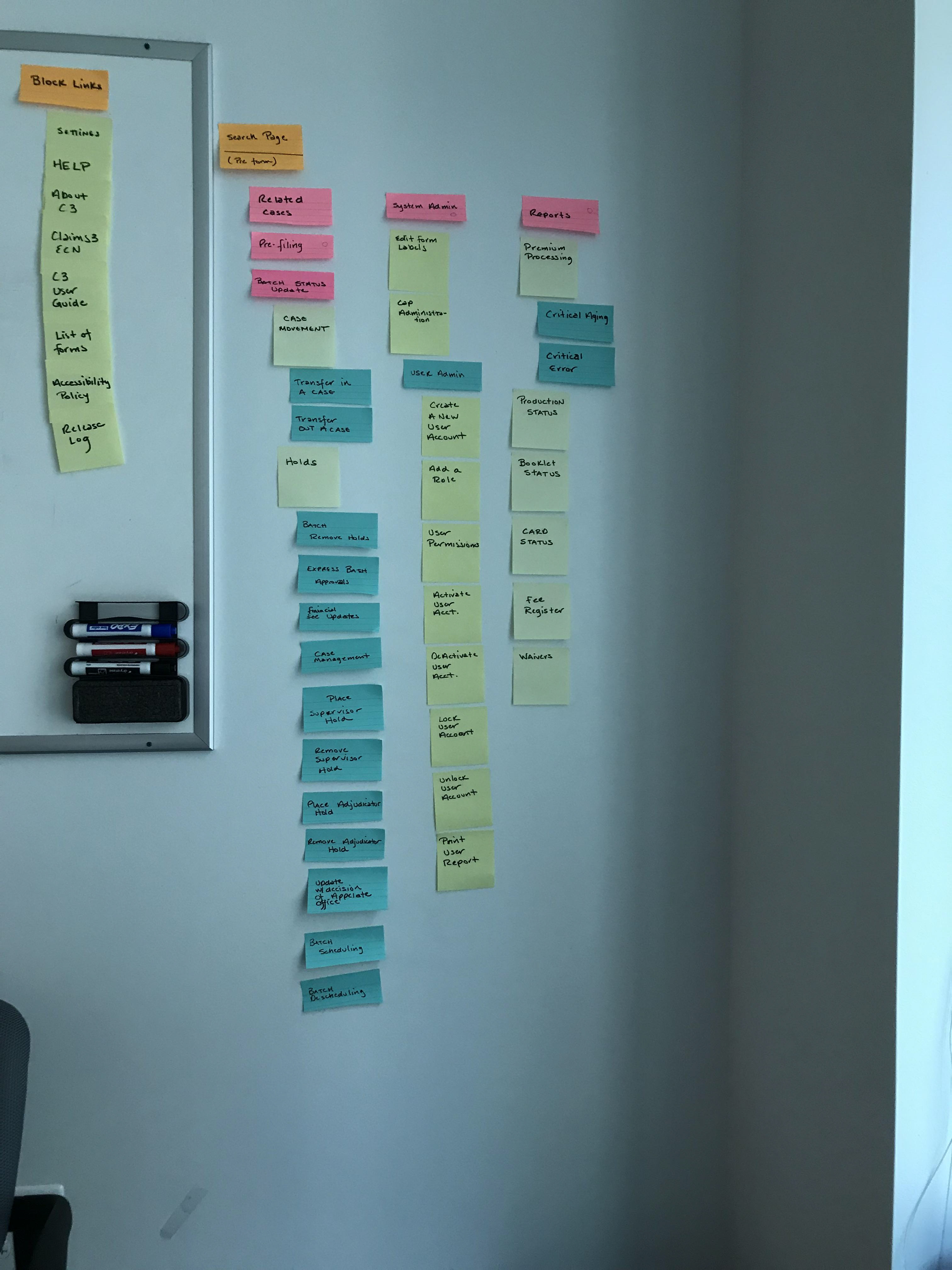
Updated Application Info Architecture
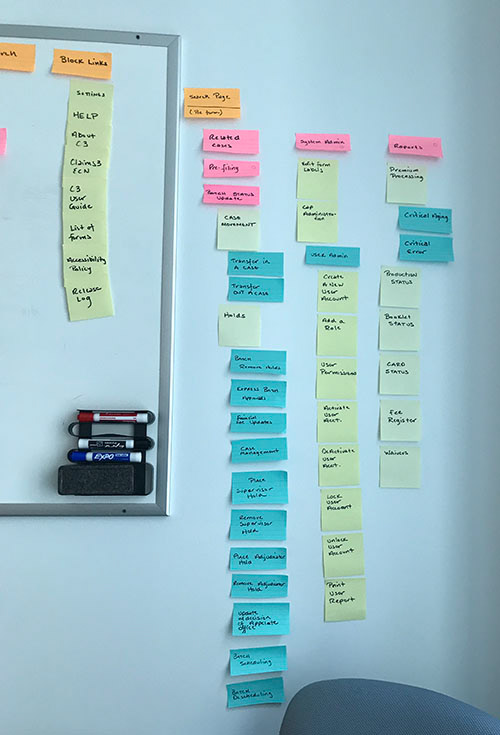
Updated Application Info Architecture
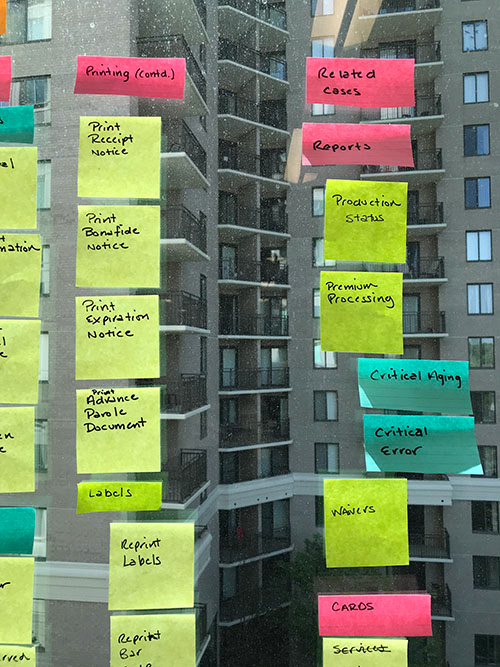
Updated Application Info Architecture
Phase I: Internal Validation
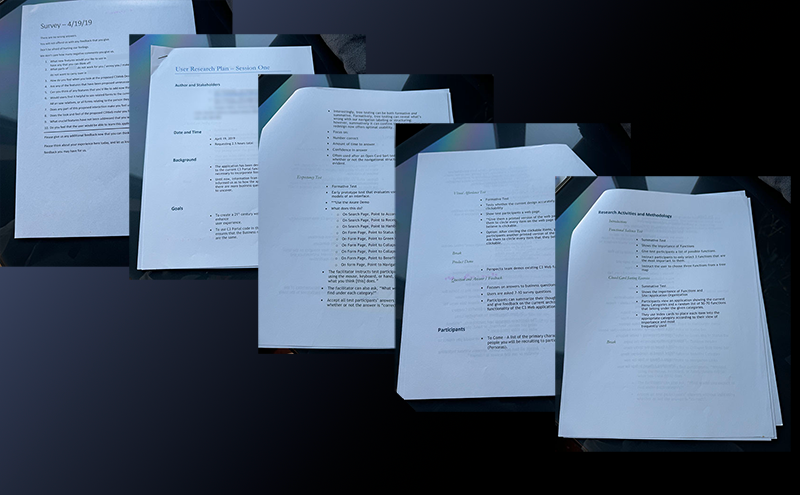
Stakeholder Research Plan
• Designed a complete, future-state Information Architecture
• Reviewed with Program Manager, CTO, and Lead Developer
• Received approval to present directly to the client
This step was intentionally unorthodox — demonstrating possibility
rather than responding to an RFP.
rather than responding to an RFP.
Phase 2: Executive Stakeholder Presentation (Washington, DC)
• Presented vision alongside Program Manager and CTO
• Walked through architecture, workflows, and design rationale
Result:
• Strong executive endorsement
• Approval to engage operational stakeholders in Nebraska
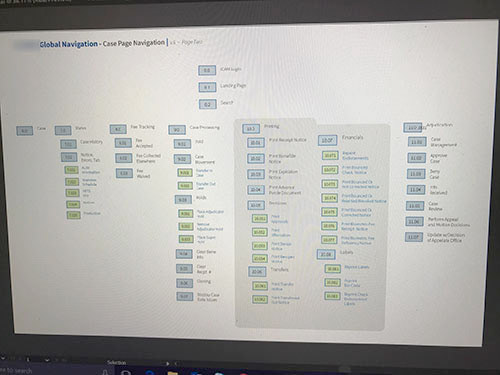
Updated Information Architecture
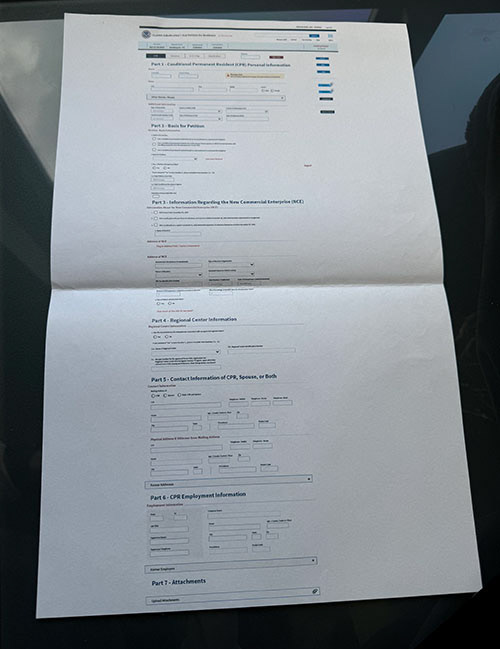
Updated Interface View 1
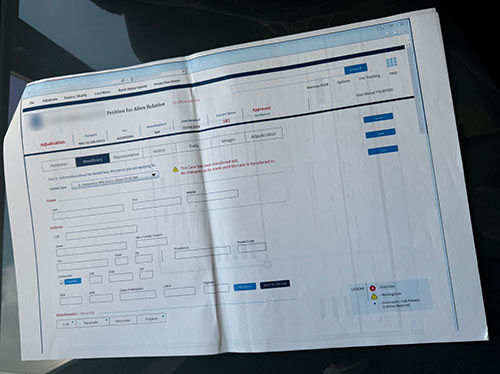
Updated Interface View 2
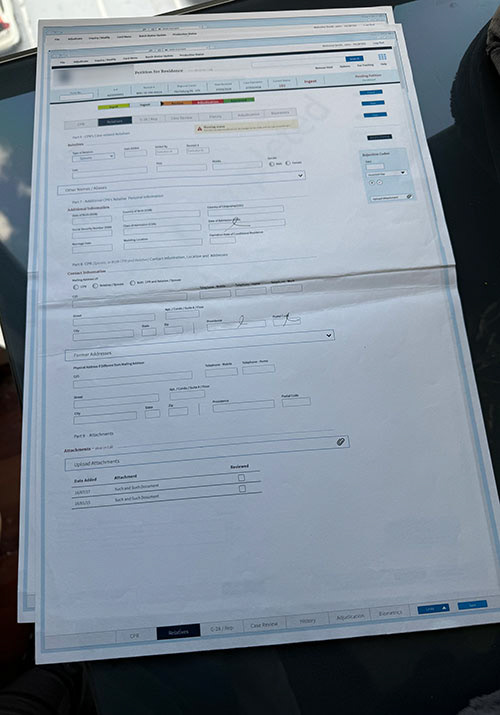
Updated Interface View 3
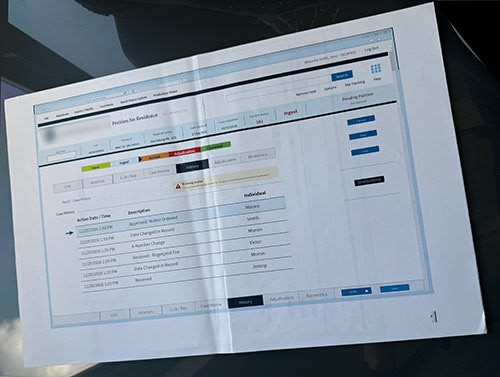
Updated Interface View 4
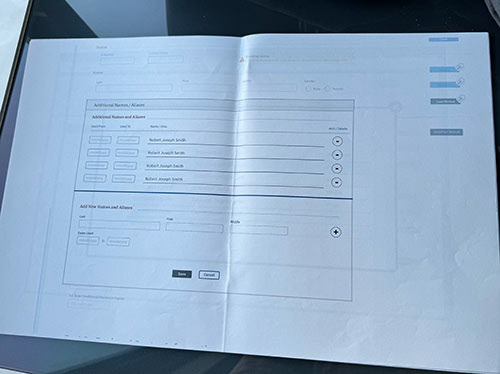
Updated Interface View 5
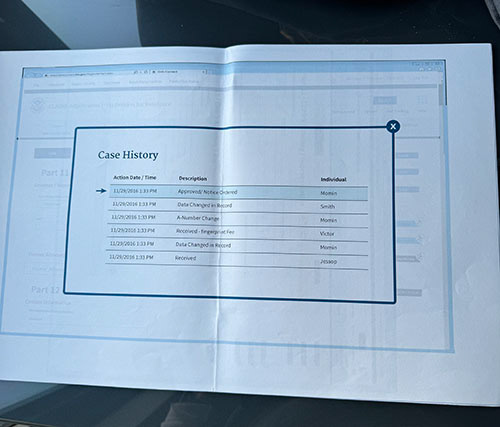
Updated Interface View 6
Phase 3: On-Site Stakeholder Engagement (Lincoln, NE)
Over three days, we:
• Conducted in-depth stakeholder discussions
• Observed end-to-end case processing
• Toured facilities and met users at each workflow stage
Outcome:
• Validated assumptions
• Collected detailed content and workflow feedback
• Built strong trust and rapport
Focused HCD Research Day
A Branch Chief dedicated a full day to UX research activities.
Methods Used:
• Structured stakeholder interview
• Functional Salience Testing
• Card Sorting
• Tree Testing
• Open-ended (non-directed) interview
Why this mattered:
• Validated navigation and prioritization
• Revealed unexpected functional priorities
• Shifted stakeholder perception of UX value
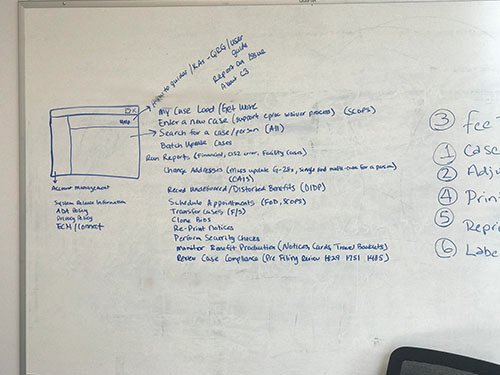
Functional Salience Test
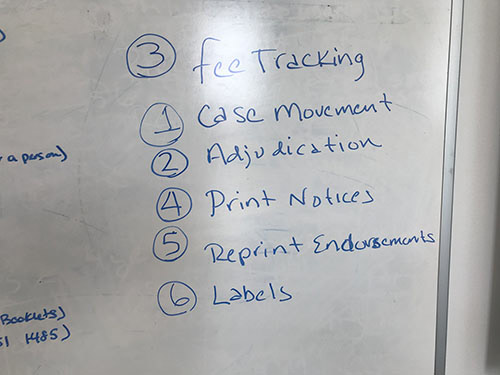
Test Priority Results
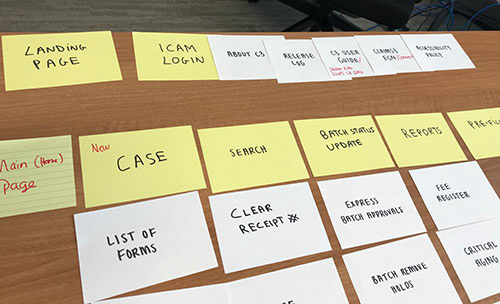
Card Sort View 1
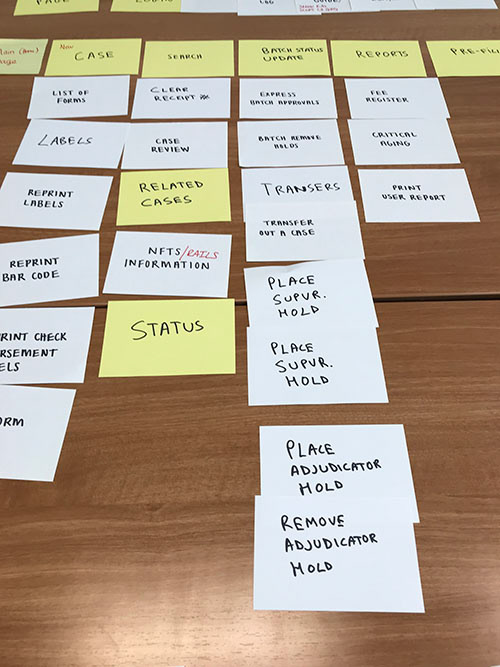
Card Sort View 2
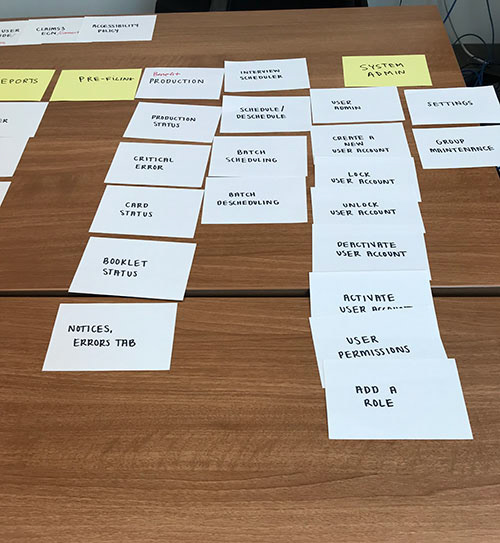
Card Sort View 3
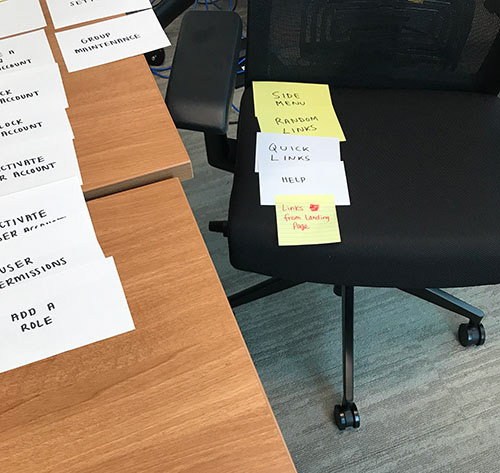
Card Sort View 4
Research Impact
• Stakeholders directly experienced the ROI of HCD
• Additional research sessions were approved
• Research insights reshaped system priorities
• UX gained credibility at senior leadership levels
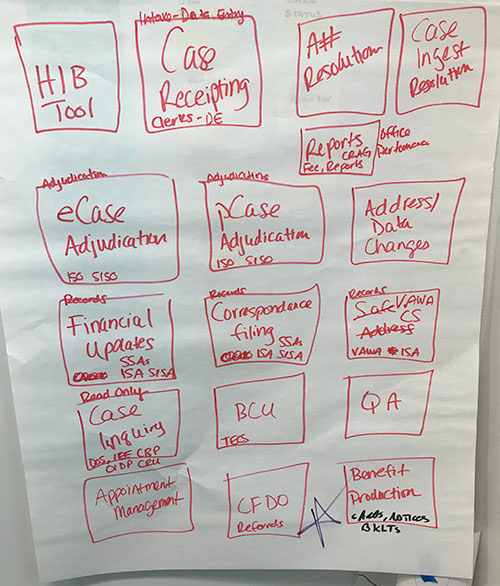
Client Notes Resulting
from the Day's Activities
from the Day's Activities
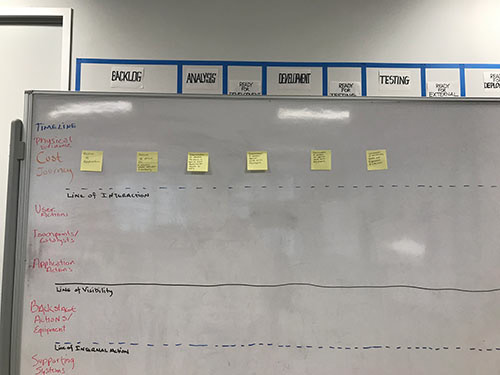
Start of the project Service Blueprint
Final Outcome
Although the full redesign was paused due to shifting priorities:
• A scalable, modern system vision was delivered
• UX prototypes and architecture influenced future thinking
• The client expanded the existing contract with additional teams
• UX maturity increased across the division and in our company
Why This Project Matters
• Demonstrated UX leadership without formal authority or scope
• Reduced organizational resistance to HCD
• Strengthened long-term client relationships
• Positioned UX as a strategic partner — not a downstream function
Selected Feedback
“This is extremely insightful — several priorities are different than we anticipated.
Is there a plan to complete rest of your interview process with her? And are there more interviews scheduled?
You are doing great work 👍. ”
— Senior Management
......................................................................................................
“Thank you again for the wonderful discussion about the xxxx Project last Friday.
I’m very excited for the future of the system.
I’m available to come back this week on Thursday. Let me know if this suits your schedule.”
— Service Center Operations Chief
Key Takeaway
Even when a project does not ship, Human-Centered Design can deliver measurable value — by aligning priorities, reducing risk, and earning trust at the executive level.
Research can be attributed to other projects and inform contracting staff of user behavior and their needs.
Research can be attributed to other projects and inform contracting staff of user behavior and their needs.